
 GBRK
1mo ago
GBRK
1mo ago
Your argument is essentially that since you saw a panda in a zoo, pandas must not actually be endangered. "Boy books exist" does not disprove "there are fewer boy books." In particular, the paucity of male editors, agents, bookstore owners, and librarians mean that even the boy books that do get selected tend to be selected for acquisition or display get selected by people with a less discerning taste for what makes books interesting to boys. It's like the difference between the kind of comic book a grandma would buy for a little boy as opposed to the kind of comic book that little boy would buy for himself. Brainrot, poor attention spans, and tiktok thirst traps also afflict girls-- but the relatively higher quantity and quality of books available to them make them more likely to read anyway.
GBRK
1mo ago
As written, your response implies that you disagree with the position that "old books aren't necessarily unreadable"-- meaning, you think old books are unreadable. Responding against what you actually mean to say-- that "old books are interesting"-- I would counter, "nuh uh." Well not actually, but c'mon-- are you totally incapable of seeing how a person might enjoy recency and currency in the media they consume, and thereby prefer to look for classes of media where they can find it?
GBRK
1mo ago
It's an exciting step, and also exactly in line with my recommendations. BoC is slop, and I'm glad it's available for kids to read. Now lets see if the rest of the publishing world follows suit.
GBRK
1mo ago
Awesome, thank you for doing this! Request for clarification-- was the AI classifying only the difference in the agent genders, or also classifying the relative proportion of each profile focused on male-or-female-targeted works?
GBRK
1mo ago
I addressed this already.
There is no shortage of yaoi manga, villainess webtoons, and cozy games to draw the attention of women, and yet all of those same tropes also make their way into traditionally published novels.
Also, try to remember that many popular manga were once Light Novels-- there is a latent demand for both written and visual forms of he same stories, often even from the exact same people.
So during its heyday, Friendship is Magic was a large enough fandom to have entire subfandoms centered around particularly popular fics. Two notable examples were Friendship Is Optimal and The Conversion Bureau. Without getting too into the weeds of it, both of these works feature pony civilization making contact with human civilization and expanding to dominate and convert humans into ponies, but both subfandoms came from extremely different ideological ground. FiO descends from the rationalist movement and features a mostly-aligned superintelligence that wants to persuade you into consensually mind-uploading, which focused its subfandom on the nature of consciousness, transhumanism, and psychology. TCB, on the other hand, was rooted very much in misanthropy, and while it did entertain interesting questions about cultural contact and transhumanism, it in the end became an entrenched conflict between the trans-misanthropic alliance on one side and fans of works like The Salvation War and Gate JSDF on the other. Each alliance competed to write their own takes on the conversion bureau theme where variously either the ponies were totally right to forcibly convert humans or the humans were totally right to lash out with overwhelming prejudice and nuclear weapons. (Fairly often you'd also see something in between two, focused on comparing the relative merits of liberty and security without necessarily coming down fully on one side.) Despite the differences between those two subfandoms, however, there was naturally substantial and contentious overlap. Chatoyance in particular was an extremely prolific writer in the trans-misanthropic side for both fandoms, and as a result gained the ire of the pro-human side. Thus, their hatedom.
By the by, the pro-human faction of the TCB subfandom was also inextricably linked with the inchoate HFY movement on sites of spacebattles and sufficientvelocity, to the point where you can draw a direct line from My Little Pony to Natowave drone edits. Also, in the meantime, more neutrally-aligned figures were writing an incredible amount of high-quality first contact fiction where humans and ponies worked together to solve some sort of problem in a way that very much prefigures the success of Project Hail Mary.
GBRK
1mo ago
The operative words in your post are
if you know where to look
That is a very high barrier to entry, and one I think you are inches away from recognizing given your later comments about marvel doctors and fifa lawyers. Men have to take an active and concerted effort to find fiction written for them, much less high quality fiction. Goodreads has an abysmally shit book recommendation system and its top-lists are all voted on overwhelmingly by women. Fanfiction sites are full up on sludge written by middle schoolers and without deep knowledge of which fandoms to read and what tags to look for you will find yourself running into works that may initially seem compelling but invariably devolve into fluff/romance/angst slop. Royal road is... royal road.
In the meantime, women have booktok influencers and glistening werewolf abs on every supermarket shelf. Overabundance leads to interest leads to consumption leads to overabundance, in a virtuous cycle.
GBRK
1mo ago
I'm extremely suspicious of claims to "timelesness" as applied to works written within living memory. You're a generation, perhaps two, away from these authors... they speak in the register of your parents and grandparents, and tell stories that would have seemed perfectly current to them. That's not timelessness, that's a nostalgic affection held for the subjects of sepia photographs. Maybe there's something at the core of their stories that will survive the ages, but to the modern youth the language they used and the values in their works are already at as far of a remove as Victory Hugo and Mary Shelley would have been to you. Entertaining, perhaps, for their distance from the present-- but otherwise largely inapplicable to their current concerns.
As for the Vorkosigan Saga and the Dresden files-- I've checked both out, and they were okay, but they also had this unnameable and unpleasant millenial quality. As when my older nerd friends have variously tried to get me into star wars, monty python, doctor who, etcetera... I could understand what once made those works appealing, and yet found myself feeling mostly cold in their aftermath. I can't even blame anything reasonable like dialog, or pacing, or plot structure, for my aversion... I think it's something much more granular in the storytelling, that sits below my conscious awareness and yet blares like a some sort of chronometric siren for unwanted time-travel.
GBRK
1mo ago
Do you actually disagree with any of the following statements?
- There are more female acquisition editors and agents than males
- Agents/editors would prefer to select books that flatter their interests and beliefs
- ...and as a result, agents/editors are more likely to select book that appeal to female interests.
GBRK
1mo ago
The essence of my post is that we're not publishing enough books that are interesting to men. The essence of your first reply was that we already had published plenty of interesting books. The essence of my first reply was that those might have been interesting to you, but that you're atypical and that therefore your reply fails to contradict my thesis. I understood the essence of your second reply as being to claim that old books aren't necessarily unreadable, and replied that "not unreadable" != "interesting". If that was noncentral, and the essence of your reply was actually something along the lines of, "there's no point making books more interesting when that doesn't necessarily make them more useful", then I encourage you to go back and read my article without skimming because I use most of it to explain why the present state of the publishing industry disadvantages books that provide any sort of value to men, and therefore why, if you care about "good books", it is necessary to first convince publishers that men like to read by reading and paying for any books, so that they see the need to select and cultivate good books. If that was noncentral, and your central point was that you men probably won't start reading good books just because they're reading bad books, then I would claim that my central point is that they definitely won't start reading good books if they're not reading any books... and as per my earlier points, that in a tautological but also very true sense men won't start reading books if there are no books they're interested in reading.
(if the central point of your 2nd-to-last reply was something totally different than my three proposals, feel free to clarify that now.)
GBRK
1mo ago
/r/Romance_for_men is already chomping at the bit for your submission. Give them the car junkie smut they're fiending for!
GBRK
1mo ago
Maybe we're just in different social groups, but I haven't noticed much of a difference between the age of the media my male and female friends enjoy, and in particular I have not noticed that my friends devote most or even much of their attention to media that existed prior to their own birth. (We're mostly 20-30 somethings.)
Maybe things are a little skewed by men being less bothered by the dissonant cultural values held and propagated by old works of media... but if this was the driving factor, should we expect the deficit of new male-oriented works to played out across all forms of media? I don't notice any lack of male-oriented music, youtube videos, games (inclusive of video and board), or even TV shows. In particular, the recent male interest in fashion and looksmaxxing seems to be reversing the trend of men being willing to wear much older fashions of clothes.
GBRK
1mo ago
"Not difficult" isn't sufficient. We need fun books to get boys and men to love reading-- and literary fiction is often written in direct subversion of what it takes for a story to be "fun." Reading about depressed writers getting cuckolded by their mistresses might be interesting if you've read a thousand stories about Buffguy McStrongJaw beating up the Unquestionable Evil Species of Alient Bug Invaders, but first you do have to read those thousand stories.
--Also, this went unaddressed in my earlier post, but twenty thousand years of human literary history doesn't matter one whit when someone feels the need for currency, or in particular a story told using the language and aesthetic of their lived experience. Yes, every theme is ultimately universal. Yes, we haven't come up with anything truly novel since Grug came up with the idea of telling his kids that if talked back to him the terrible LionSnakeFalcon would drop out of the sky and murderize them into little bits. But boy is it a lot less cognitive effort to read a story about a farmboy fighting a dragon instead of a caveman fighting a LionSnakeFalcon, and that leaves a lot of extra cognitive effort to spare for contemplating the deep truths common between both stories.
GBRK
1mo ago
I'm not actually blaming Woke, for the record-- that's why I put that whole spiel about this NOT being a conspiracy. But I am convinced this is very much a supply issue, not a demand issue-- I stopped pirating music when spotify got easy and good enough to be a better deal... (well in point of fact I stopped when grooveshark got DMCA'd, but didn't feel the need to find an alternative given that spotify was just *there)-- and I'll stop pirating books when...
Okay, maybe you have a tiny point. TBH the cause is probably at least somewhat bidirectional. But while I acknowledge that I'm getting into bravery debate here... I feel like the impact of the pressures on men are dramatically underestimated compared to the impact of the pressures by men, when it comes to the publishing industry. (And maybe also in general but that is a way larger discussion that I have the time to have right now) As a baseline estimate, since we see much more comparable reading rates for younger vs older children...
Reading rates are lower for boys at every age. Over a third of girls (36%) aged eight to 11 said they read daily, compared with about a quarter (26.3%) of boys of the same age. By the age of 14 to 16, this had fallen to 17.6% of girls and just 9.8% of boys.
1.4x vs 1.8x
I would guess that at least half of those boys are "lost" because of an insufficient supply of books. If the proportion at age 14-16 was 1.6x, we would see ~11% of boys reading. That doesn't sound like much, but that's 10% more male readers! And we should expect that this effect is actually cumulative given decreased rates of reading with age. Given the relationship between reading ability, educational attainment, and professional success, this difference in reading ability likely has massive downstream effects on the total number of men making it through to elite positions. Correcting that deficit is the opposite of a "waste of time." We could have-- at minimum, at an estimate-- a minimum of 10% more male doctors, lawyers, and engineers just by making sure more male-oriented books are published and promoted. Even ignoring the negative effects of the disparity between male and female achievement, the absolute effects of so many missing elites is likely to be significant and negative.
(Unless you believe AI will solve everything, but that's a fully general argument for not caring about anything.)
The He-Man Woman-Haters Club or NO MA'AM aren't going to somehow seize the reigns of the Twilight IP and start "subverting" it by having Bella eventually chucked onto the street in the reboot for being a washed up ratchet whore
I mean if I had a nickel for every time I found a genderswapped rewrite of the twilight series designed to cater more towards men I would have three nickles, of which one was given to me by Stephanie Meyer herself. (The other two nickels come from a smut fic on QQ and a male-oriented-romance fic on SB, both abandoned but otherwise very solid.)
...I always knew Stephanie Meyer was a basedlord. I just wish she put more energy towards though-provoking sci-fi than lowbrow romance-- The Host was actually kind of goated.
GBRK
1mo ago
This is not a very good sampling method because the profiles are sorted by first name, and women are overrepresented among people whose first name starts with A.
Okay, but also two of the woman I cited had the first name "Alex" which is normally a ~95%+ male name. Bayesian statistics would tell you this is NOT an expected result.
Personally, I'm probably going to keep doing most of my reading online
Ditto, undisputably, but I am legitimately concerned about the future of nerdy young men who might have otherwise gotten into reading and now are more likely to find less productive hobbies instead.
(I'm not concerned about the future of young men in general since they're just competition, but I do feel for the nerdy ones.)
GBRK
1mo ago
Publishing as far as I can tell has zero moat or at best a very small one. What does big publishing control that would make only their books get read?
Negotiating for shelf space with nationwide bookstores is definitely not "zero moat", and neither is the actual industry of getting a massive amount of books printed at economic scale.
Maybe something else changed and men just don’t read books anymore?
What changed was the proportion of men involved in finding and publishing books, and the proportion, thereby, of men's book that were publishing. SEE:
But as far as I can tell you can just publish books and sell them on Amazon
For a broke kid, buying books off amazon has a much higher barrier to entry than picking a shiny cover out of a lineup at their school library. Especially since if they're on a computer and don't have a pre-existing love of reading, it's very likely that they'll just do something other than reading instead of doggedly sorting through the monsterfucking romantasy slop on the amazon bestseller lists.
(I'm pretty sure I addressed all this in my post?)
...also, don't discount the value and difficult of professional editing and cover-design. Publishers certainly don't. Traditionally published novels have a far greater up-front investment designed to make them marketable and readable, and that pays on at the back and as it encourages people to start and keep reading.
So then you don’t have a best books lists. I feel like you could create that easily. Spitballing maybe it would be good to have someone famous sponsor a best new children’s book lists. Like Mr. Beast?
Unironically a good idea, I was thinking of self-publishing my book anyway and it might be worth it to find and sponsor a few niche youtubers to promote it. Thank you!
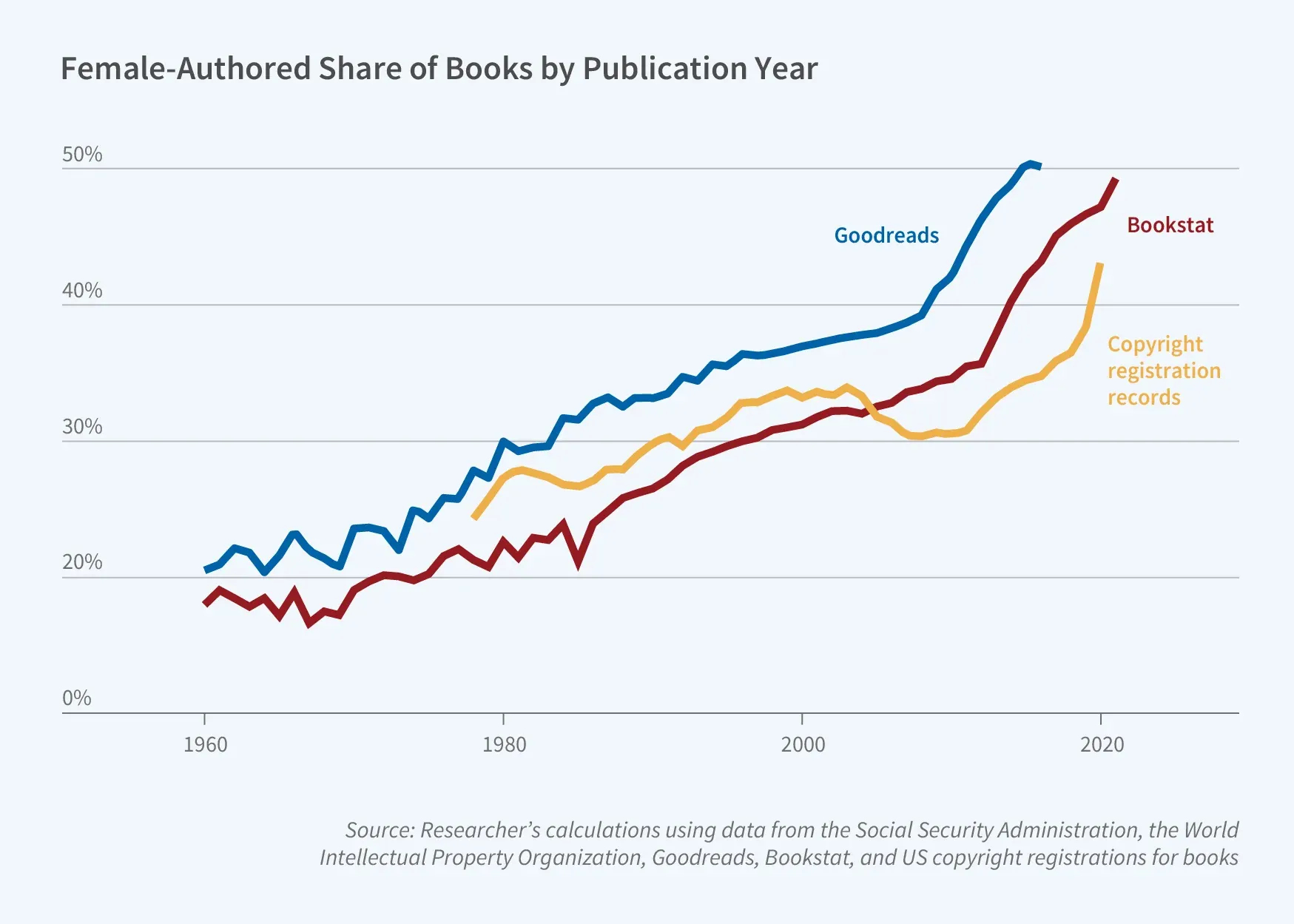 GBRK
1mo ago
GBRK
1mo ago
I do believe the first post was auto-removed because it was gone literally as soon as I posted it. The second post stayed up for like two minutes-- long enough to attract an unknown amount of downvotes and 46 angry comments. A mod replied to my query to tell me it was autoremoved for reports of AI and incivility. On reflection, it seems like there is a conspiracy-- but it comes from the users of the subreddit, rather than its leaders, who themselves take no more interest in the matter than pontius pilot washing his hands of Jesus' execution.
(Yes, I do have an ego. Why do you ask?)
GBRK
1mo ago
Uh, why? There's twenty thousand years of human literature out there. Believe it or not, the ancestors even had literature that wasn't highbrow (Portnoy's Complaint? Robert Louis Stevenson?).
If you're happy with the amount of reading that you do then this advice isn't for you. I'm addressing specifically the kind of person that feels like they should read more, but can never seem to get around to it-- because, in my opinion, their problem is that they need to wrap bitter pills in provolone. Before reading the great books, it is necessary to read the good ones-- to create a habit of reading so that your mental muscles don't end up sore three paragraphs into a difficult book.
I've ranted about the problems with having a female-dominated publishing pipeline before... and I'll fucking do it again! I know I'm preaching to the choir here but I'd already written this all up for a submission to the /r/books subreddit so I figured I'd repost it here. (And the /r/books people made me take out all the links and remove the part where I used AI for a relatively unbiased analysis of manuscript wish list profiles so I wanted to repost this version to a place that would appreciate it.)
Anyway--
Why Boys Don't Read Anymore
I can't go into a supermarket novel aisle without seeing three full shelves of romantasy novels about plucky young women with magical powers drawing the obsessive affections of foreboding but ultimately caring men. So where are the novels about clueless but good-hearted losers reincarnating into rpg worlds with a special skill that makes them irresistable to a harem of ninja babes?
...okay, I see how that complaint can sound ridiculous, but I am honestly and totally serious. It feels like publishing companies are making absolutely no effort to find and print books young men might actually like, and very naturally boys end up drifting away from reading toward hobbies where they might actually be catered toward. Let me substantiate that by talking about my experiences a little...
I've always been a voracious reader. As a kid I was already addicted to The Magic Tree House, Redwall, Eragon, Warrior Cats, Percy Jackson, Maximum Ride, Harry Potter, Uglies, and so on and so forth. Entering middle school I transitioned quite naturally into reading and writing fanfiction. I focused mostly on male-dominated fandoms like Naruto, Pokemon, and My Little Pony, but still had plenty of exposure to female-dominated fandoms like Twilight and Harry Potter. A few decades on, it feels like the tropes pioneered in the female-dominate fandoms have graduated to the bookstores and awards lists: I don't have to look far to see Dracomione-alike dark academia or shifter romances with heat cycles. But where are the rewritten naruto revenge fics? Where is all the My Little Pony-inspired first-contact sci-fi? Why do none of the monsterfucking novels involve sick tournament arcs? LitRPGs have become by FAR the dominant genre on Royaload... but their only printed representative is Dungeon Crawler Carl-- which specifically avoids or subverts many of the tropes common to the genre. In the meantime, the other branches of the Progression Fantasy tree have remained completely neglected. The Xianxia fad rose and fell without publishers even noticing. Rational/ist fiction like The Methods of Rationality, Friendship is Optimal, and UNSONG inspired an entire generation of AI researchers. You are entirely likely to have your values forcibly re-aligned toward friendship and ponies because of a genre you never had the chance to hear about.
This isn't about the gender of the protagonist, either! Worm is incredibly famous online in male-dominated fanfiction spaces. So is A Practical Guide to Evil. Both those novels feature female protagonists, and both of these novels have dedicated fanfiction communities that reveal a substantial latent demand for retreads of the themes, plots, and character archetypes they feature. And while I wish I could blame this whole issue on male flight to video games, manga, and webtoons, that entire argument would instantly fall apart-- There is no shortage of yaoi manga, villainess webtoons, and cozy games to draw the attention of women, and yet all of those same tropes also make their way into traditionally published novels.
And finally, this isn't about fiction versus non-fiction. Nonfiction is stereotypes as being more appealing to men, but that's not actually true. Women tend to read different genres of nonfiction than men-- women's lit and spirituality in place of, say, popular history... but Women still read more nonfiction in total than men.
No, this problem is rooted in the publishers-- and in particular the preferences of the people who become agents and acquisition editors. I've been trying to get published lately*, and in the process had a look through manuscript wishlist, which is where literary agents and editors post their wishlists for what kind of tropes, plots, and characters they want in. Having read so many profiles... the gender ratio of agents, and especially newer agents/agents open to debut authors is incredibly skewed toward women. And, exactly as that skew implies, the proportion of profiles even hypothetically open to male-targeted books is a faction of the proportion of profiles open to women-targeted books. Similarly, even comparing within the same profile, agents and editors spend a greater proportion of their time soliciting women-targeted books as opposed to male-targeted books. (Excluding requests that are gender neutral in nature.) As an experiment, I filtered for profiles that were interested in sci-fi (to make sure they were at least in principle interested in a male-dominated genre) and copy-pasted everything in their profile into gemini with the following prompt:
evaluate this manuscript wishlist profile to determine what proportion of it seeks to acquire novels that are likely to be more popular with a given gender [specify each proportion], or likely to be equally popular. [specify proportion]
Looking at alphabetically the first profiles--
- Broad Female-Skewing Appeal:
65% - Equal / Gender-Neutral Appeal: 30%
- Male-Skewing Appeal:
5%
Primarily Female-Skewing 60% – 65%
Gender-Balanced / Equal Appeal 30% – 35%
Primarily Male-Skewing 5% – 10%
Equally Popular Across Genders: 56% (9 out of 16 specific fiction requests)
More Popular with Female Readers: 38% (6 out of 16 specific fiction requests)6% (1 out of 16 specific fiction requests)
More Popular with Male Readers:
(Feel free to try and replicate my results with other AI or just read through the profiles yourself-- I'm sure the percentages won't agree exactly, but I think the ratios between female/male appeal will be similar.)
I think these results are pretty clear: the people in charge of finding publishers new books are mostly women, and as a reasonable consequence mostly interested in women-targeted content. I'm not proposing that there's any secret conspiracy to suppress men's voices... but conspiracy isn't necessary to prevent men's voices from, in effect, being suppressed. The modern crop of editors and agents simply largely lacks the lived experience required accurately identify literature boys and men find interesting, and similarly lacks a philosophical commitment to identifying and elevating a new generation of agents and editors who will.
So what can we do?
The publishing world won't fix itself. A lack of male-oriented books means a lack of male readers means a lack of sales means a lack of male-oriented books. Similarly, a lack of male reader means a lack of male writers and editors means a lack of male-oriented books means a lack of male readers. And at least speaking personally, I'm against DEI in general and for men in particular. But where does that leave us?
With slop.
No, seriously. If you feel like you're a guy, and you don't read enough, stop forcing yourself to read highbrow literature or books like you feel you should read, and track down some lowbrow junkfood. I suggest /r/Romance_For_Men , /r/HFY , /r/ProgressionFantasy , or anything on the royalroad front page. If you're a parent of one or more boys, point them toward the pig food dispenser. And I need to clarify that I am not being hyperbolic here. Just like babies have to eat mashed-up food before they can chew through steaks, young men need a regular diet of sophomoric fantasies before they're ready for Asimov or Murakami. Yes, there's a certain risk that the Heinlens and Ayn Rands of the world will feed them masculinist fantasies incompatible with the feminist-egalitarian view of the world you might prefer to instill... but hey, at least that's better than whatever the TikTok algorithm would have done to them.
And then...
Pay for the slop. Talk about the slop. Write your own slop, just for fun. We live in the internet age-- a problem created by gatekeepers can be solved by realizing that mass mediate makes even the tallest walls a short fence that you can simply hop over, and encourage others to do the same. Online-first publishers like Aethon are already in the process of bringing out the proverbial literary wrecking ball-- all they need is some momentum.
*necessary coda-- I haven't managed to get published because my book simply isn't good enough. I know what my problems are and they're largely orthogonal to this rant.
edit: my post just got removed from /r/books again! And this time I removed all references/use of llms and links, which is what the moderator told me got me removed last time. Now I am suspecting a conspiracy.
GBRK
1mo ago
I would wager that, looking at the segment of the AI and EA intelligentsia that reads as a hobby, a significant fraction have read at least some of the rational/ist corpus. I base this off my own social group, where I keep discovering that my friends also discovered and read books like Worm, Metropolitan Man, and Friendship is Optimal at formative stages of their life. It might not be 20% of the AI world, or even 5%, but ideas are promiscuous-- if even one person in an organization has read Cordyceps or There Is No Antimemetics Division they're going to talk about the relevant ideas to their friends and coworkers, especially when those ideas are relevant to the tasks they have at hand.
It's like the article about the silicon valley serial entrepreneur addicted to pokemon smut fanfiction.
...actually I lied, it isn't. I just thought the article was hilarious and wanted to link it.
GBRK
1mo ago
I'm sorry, but it's hilarious to me that Chatoyance ponyfic is getting posted to themotte, of all places. Not because I'm part of her substantial hatedom, but because rational fanfiction is without exaggeration one of the most intellectually influential literary movements of the 21st century, and notwithstanding that, it is substantially about ponies. And the mainstream literary establishment doesn't even realize that! Not even because they're constitutionally opposed to it, as they might be to right-wing or incel literature... But because it's compromised predominantly of middle aged women who would rather read about schizoid trans men than autistic trans women.
GBRK
1mo ago
I take compounded semaglutide for weight loss and, anecdotally, it really does seem reduce cravings in general. (Which I was specifically hoping for when I got on them since I also struggle with being too horny.) In particular, I've noticed that while I still get horny, it's actually possible to distract myself and remain distracted, without the horny thoughts recurring later with even more power. I won't say the drug is 100% or even 40% effective, but I do feel like my ability to respectfully interact with attractive women has meaningfully improved.
I do have to bring up an interesting side effect though: as my libido has become more controllable it feels like I've become a lot pickier about how I evaluate women's faces. It used to feel like virtually every woman with a body I liked also had a face I liked, but now I notice facial asymmetries and defects in composition even on short girls with good hip/bust to waist ratios.
(Possible confounder: me just getting naturally less horny as I delve into the latter half of my twenties )
GBRK
2mo ago
You say this isn't an example of ai writing but I noticed a few very significant tells of AI slop. I won't harp on the section formatting and random inclusion of a table because those aren't necessarily bad things, but a few of these paragraphs engage in possibly the single thing I hate most about AI writing: the tendency to tack on vacuous, unnecessary, self-congratulatory statements at the end of paragraphs. For example:
It's a good demonstration of how the sheriff/police division isn't just historical trivia; it determines, very concretely, who is politically on the hook when something goes wrong.
... If it's such a good demonstration, the reader should already have concluded that from reading it. Cut!
American law enforcement, in other words, is a braid of at least three lineages — feudal county sheriff, urban professional police, and Southern slave-patrol/frontier policing — not one clean line.
Again, this should be obvious from the rest of the paragraph. Cut!
I won't go so far as to directly accuse you of composing this essay wholly with AI, but it is definitely AI inflected in that it contains a lot of information that is likely true but not necessarily interesting for humans. A good essayist should prioritize. You spend about as long talking about the etymology of the word sheriff as you spend talking about the history and effectiveness of london's municipal police department, and as a consequence completely gloss over the historical sources actually relevant for demonstrating your central point.
As a maxim: develop taste. Keep ONLY the delicious bits and spit the rest out.
I've noticed, meanwhile, that girls are more interested period novels and traditional styles of medicine and mythology (ref: astrology.) To be frank, I don't think we're going to get anywhere talking about which gender likes old stuff more. I can display numerical inequalities at every level of the publishing industry in favor of women, and have-- I think-- compelling a priori reasons to believe that inequality should cause a disparity in reading levels. I don't think the "likes old stuff" position has any argument that isn't fully generalizeable to, "then why don't publishers just release more new things that harken back to the old stuff?" Which in turn points back to the gender inequality issue.
More options
Context Copy link